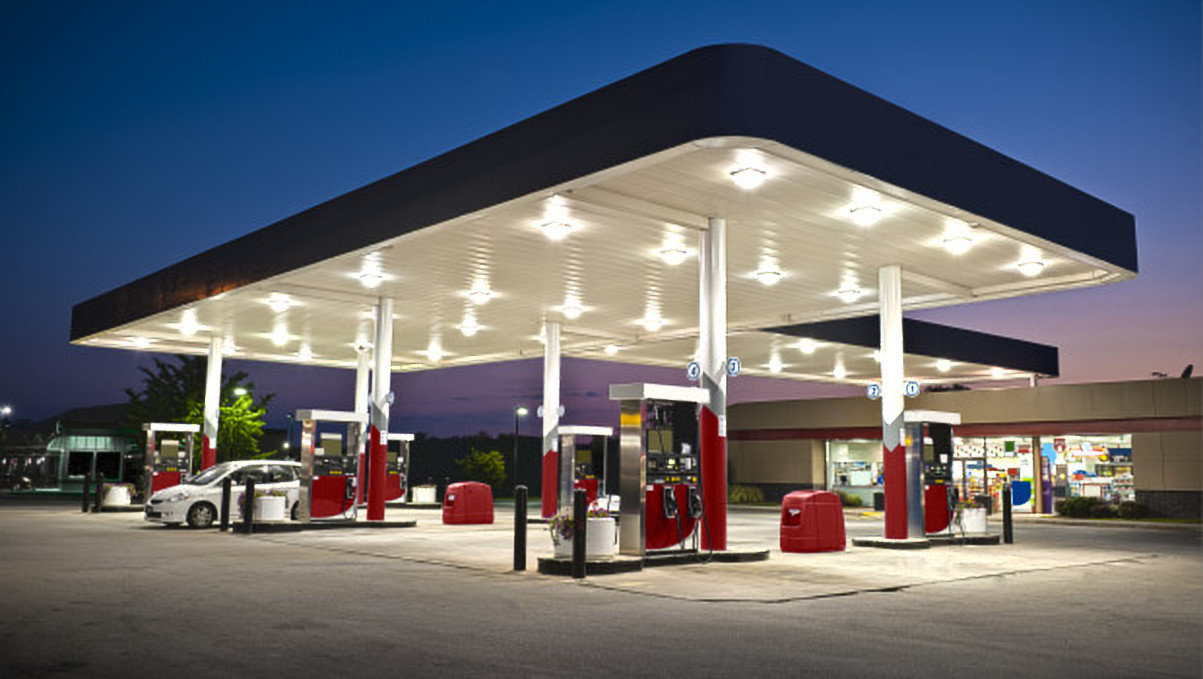
Africanicity Investment Group’s administration has extensive experience in preparing and submitting site, wholesale and retail license applications to the Department of Energy under the requirements of the Petroleum Products Act.
The Petroleum Products Act requires that all wholesale license applications include at least 26% of his HDSA (Historically Disadvantaged South Africa) shares, who is a South African citizen.
The Petroleum Products Act stipulates that all wholesale license applications must contain at least 26% HDSA (Historically Disadvantaged South African) shareholding, which is a South African citizen:
Black female or male
Coloured female or male
Indian female or male
White female (born before 1998)
Any disabled person, regardless of race or gender
New filling station / truck stop developments
Feasibility Study – which includes a traffic count, volumetric analysis, and economic viability assessment, in order to determine the short and long-term viability of the intended development.
Road access approval – must be obtained from the authority in control of the particular road.
Environmental approval – according to the requirements of the National Environmental Management Act
Rezoning of land – Special application by a town planner
Supply and branding agreement – from a licensed fuel supplier.
Africanicity Investment Group offers a one-stop service that brings relevant Specialists with specific experience together, to conduct the complete process for our clients, up to the point where actual construction of the intended filling station and/or truck stop can commence
Feasibility Study
Whenever a new filling station development is planned, and the developer approaches a Fuel Company, The Department of Energy, the Local Government, the Department of Environmental Affairs, the Roads Authority, etc. their first and most important requirement is that a Feasibility Study must first be conducted. The aim and purpose of this two-stage process can best be described as follows:
Phase 1. – Traffic Count, Volumetric Analysis, and Economic Viability Study.
The first step is to obtain a traffic count at the position of the proposed development. From the traffic data, a volumetric analysis using industry benchmarks and standards relating to the typical demographic environment of the intended development is carried out to determine the reasonably expected turnover potential of a filling station, in terms of “liters of fuel sales” at the particular location would be. Although there is no clear and definite cut-off point, a count of fewer than 180 000 liters per month is normally regarded as not viable, and it would probably not make any sense to proceed and spend more money on the project.
The second step is to form a picture of the total expected income and operating expenses of the intended filling station, by using industry standards and benchmarks, as well as the guidelines of the recently announced Regulated Accounting System (RAS) including other envisaged income sources, such as lubricants sales, and convenience shop turnover, in order to forecast a potential net operating profit from the intended business, once completed.
Next, an estimation of the expected development cost of the filling station is compiled, which is measured against the potential net profit income and takes the economic viability study to a conclusion, depicted by way of a Net Present Value and Internal Rate of Return calculation and assumption report. The results of this report are critical in the final approval of a Site and Retail license application at the Department of Energy.
Phase 2. – Site Assessment and trading area analysis.
This stage of the study focuses on two major issues:
A site assessment is to determine if there are any obvious (on record) conditions and/or reasons that environmental approval and a land re-zoning application from the Provincial or Local Authority may be declined. The approach would be to eliminate potential obstacles, by investigating whether they currently exist, and/or may appear in the future.
Physical site investigations and desktop studies are conducted to investigate:
Zoning and physical conditions like Servitudes, Power lines, Gas or water pipelines, Local Authority town planning, Proximity of schools, hospitals, roads, railways, etc.
Environmental conditions like Wetlands, Conservation areas, Geo-hydrologic conditions, etc.
Heritage, cultural and archaeological details, like Graveyards, Ancestral interests, Battlefields, Historical settlements, etc.
It must be noted that the desk-top study is not an Environmental Impact Assessment (EIA), but merely an investigation of existing known records and/or conditions, aimed at assisting the Developer with a decision on whether to proceed with a formal EIA process or other studies.
The final step would be to form an opinion of the probability of a successful Site and Retail license application at the Department of Energy. This is done by way of a basic trading area analysis to firstly, determine the existing availability of fuel and related services in the envisaged area from which the intended development would draw customer support, and secondly to determine the need and desirability of such a new development and the intended service it will render to the specific community. The probability and potential weight of formal objections from other fuel retailers in the area to a Site and Retail license application is also looked at.
Once the feasibility study has been completed, and if the results indicate sufficient positive potential, and if the decision is made to proceed with the process, the first step would be to appoint an Engineer to establish a very basic terrain plan, which should indicate the position of buildings, as well as access road and parking layout. The terrain plan should also contain a basic stormwater plan, a basic sewerage plan, and an envisaged water and electricity supply.
Road access approval
Application for rad access must be obtained from the relevant authority (Municipal / Provincial / SANRAL) in control of the particular road/s. Please note that a Traffic Impact Assessment may be required, which must be conducted by a competent Traffic Engineer.
Rezoning of the land
An application for rezoning must be brought by a competent Town Planner and will be subject to the conditions of the integrated development plan of the specific applicable regional or municipal authority.
Supply and branding agreement
As development and branding consultants for several petroleum companies, Africanicity Investment Group will discuss the results of the feasibility study and the information of the site and intended project with the relevant development specialists of some petroleum suppliers, obtaining advice and input from them at an early stage. Choosing the right fuel supplier is of utmost importance, and the number of projected litres of fuel that the intended new filling station will potentially sell, is one of the main factors that will determine the amount of capital investment that any fuel supplier would be willing to inject in a new filling station development. Africanicity Investment Group has established working relationships with various major and smaller fuel suppliers, and we can assist the developer to negotiate the best supply and branding package for the new filling station development.
Environmental approval
Any proposed development (construction and operational aspects) of a new filling station and/or truck stop shall inter alia require compliance with the requirements of:
The development of the filling station and associated infrastructure may trigger certain listed activities in terms of the Environmental Impact Assessment Regulations, which will determine the type and extent of studies and required steps of compliance that must be conducted.
Aspects like the storage capacity of petroleum products, the presence or proximity of wetlands, watercourses, declared conservation or heritage areas as well as a variety of others, may also trigger requirements.
The site and Retail licenses
Upon Environmental, Road Access, and Rezoning approval, the often long and complicated process of application for Site and Retail licenses at the Department of Energy follows. These applications require the skills and input of a Specialist Attorney. Africanicity Investment Group has a long and excellent working relationship with such specialists who are well known and respected in this field, with an exceptional success record in specific site and retail license applications.
Financing
Although (depending on the results of the volumetric analysis) most developers are normally able to obtain sufficient financing for the development cost, and although the fuel supplier could make a substantial contribution, it is generally accepted or expected that the prospective developer should at least have some own unencumbered capital available. Once the site and retail licenses have been approved, the developer should be able to obtain financing for between 50% and 80% of the development cost, with relative ease.
Summary
Understanding the intrinsic working of the retail fuel market and the regulatory nature thereof is extremely important for any current or prospective fuel retailer. The recently introduced Regulated Accounting System (RAS) which was designed and structured to create greater parity in the application of wholesaler and retailer margins as well as the compensation for the property owners’ expenses, is a complex and ever-changing environment. It is important for the retailer as well as the property owner to understand the RAS processes, benefits, and responsibilities that are applicable to them respectively, in order to gain an optimum advantage.
Although we go to great lengths to ensure a proper investigation of the site conditions, neither Africanicity Investment Group nor any of its development partners can ever guarantee approval of any application (Road Access / Rezoning / Environmental / License or any other)
Likewise, all calculations and forecasts in the feasibility study are based on industry data and statistics, but no guarantee whatsoever of the success or profitability of a filling station that is developed is given or implied.
Once the decision is made by the land owner/developer (on grounds of a positive feasibility study) to proceed with a formal development process, Africanicity Investment Group can assist with the negotiation of a supply and branding agreement with a petroleum company that is perfectly geared for new filling station developments, provided that they make economically viable sense.
Although there are no laws that prohibit the Department of Energy to issue a Site and/or Retail license to a non-BBBEE applicant, it is advisable to support and subscribe to the spirit thereof, especially where the possibility of developing and/or owning more than one retail fuel outlet over time is envisaged.
Careful and proper planning of the BBBEE approach is therefore extremely important, and nothing less than a good long-term investment strategy. Africanicity Investment Group often brings serious, able, and creditable investors from different cultural and racial backgrounds together and facilitate the forming of partnerships.